

If you are looking into meditation for beginners in Birmingham, there is a good chance you have already wondered whether you are actually capable of meditating.
Read More: Meditation Classes for Beginners Birmingham
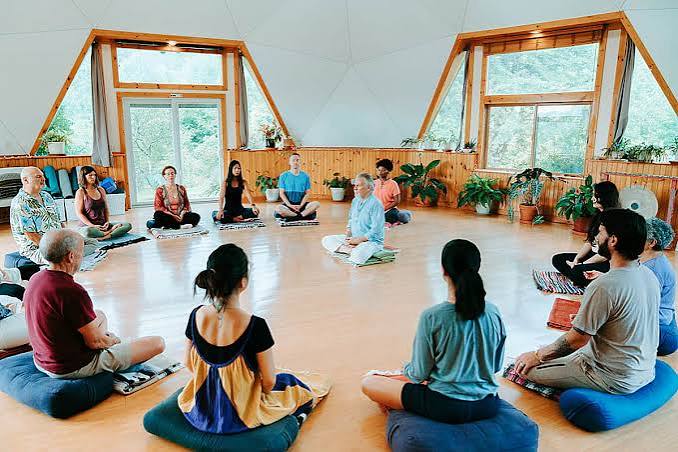
Perhaps you have tried sitting quietly before, only to find yourself thinking about work, dinner, your phone, something someone said yesterday and everything except meditation.
That does not mean you failed.
One of the biggest misunderstandings about meditation is the idea that you have to completely empty your mind. You do not.
For a beginner, meditation can simply mean learning to notice where your attention has gone and gently bringing it back.
If you are interested in learning meditation but are not sure where to begin, these seven steps can make starting feel much more approachable.
1. Begin with a few minutes: Meditation for Beginners in Birmingham
You do not need to meditate for 30 minutes on your first day.
In fact, setting an ambitious target can make meditation feel like another task you need to complete.
Try three to five minutes.
Sit somewhere comfortable, put your phone on silent and give yourself that small amount of uninterrupted time.
Once a few minutes begin to feel natural, you can gradually stay for longer if you want to.
The NHS also recommends finding a meditation routine that works around your own life rather than assuming there is one correct duration for everyone. nhs.uk
2. Find a comfortable position
You do not have to sit cross-legged on the floor.
A chair is perfectly fine.
Place your feet comfortably on the floor and allow your shoulders to relax. You can rest your hands wherever they feel natural.
The aim is not to create the perfect meditation photograph. The aim is to find a position where you can stay comfortably without spending the entire session thinking about your knees or your back.
3. Choose one thing to focus on
Your breathing is one of the simplest places to start.
You do not necessarily need to change it.
Simply notice it.
Notice where you feel your breath most clearly. Perhaps that is around your nose. Perhaps you notice your chest moving, or your abdomen gently rising and falling.
Your breath gives your attention somewhere to return to whenever your thoughts wander.
4. Expect your mind to wander
It will.
You might suddenly remember something you need from the supermarket.
You may start planning tomorrow.
You might replay a conversation from three years ago for no apparent reason.
That is normal.
When you realise your attention has moved away from your meditation, simply notice what happened and bring it back.
You do not need to become frustrated with yourself.
Recognising that your mind wandered is actually part of the practice.
5. Stop trying to feel a particular way
People often begin meditation because they want to feel calmer.
That is understandable, but trying too hard to manufacture calm can make meditation surprisingly stressful.
Some sessions may feel peaceful.
Some may feel restless.
On another day, you may simply notice that you are tired.
Allow the experience to be whatever it is.
Meditation is not a performance.
6. Practise regularly rather than perfectly
A short practice that you actually repeat can be more realistic than planning a long session that never fits into your schedule.
Think about where meditation could naturally sit within your day.
Perhaps you have five quiet minutes after waking up.
Maybe lunchtime works better.
You could prefer the evening when everything else has settled down.
There is no universal perfect time.
The useful time is the one you are realistically able to return to.
7. Consider learning with other beginners
Learning independently works very well for some people.
Other people prefer having somebody guide them through the process.
A beginner meditation class can give you a structured place to learn techniques, ask questions and understand what you are experiencing.
It can also remove some of the uncertainty that comes with trying to learn everything from videos or articles.
What if I cannot stop thinking?
You do not need to.
Meditation is not necessarily about removing thoughts.
It is more about becoming aware of them without automatically following every thought wherever it wants to take you.
You notice.
You return.
Then you repeat.
The NHS describes mindfulness meditation in a similar way: noticing thoughts, sounds, breathing or sensations and bringing attention back when the mind wanders. nhs.uk
Looking for meditation for beginners in Birmingham?
Isvaara is developing beginner-friendly group meditation classes in Birmingham.
The programme is intended to help people learn gradually rather than assuming everyone joining already knows how to meditate.
Isvaara’s current approach places particular importance on helping beginners understand posture, develop their practice progressively and learn in a supportive group environment.
Classes are planned across Birmingham, with details being released as venues and schedules are confirmed.
If you would like to know when registration opens, visit the Isvaara Meditation Classes in Birmingham page and join the waiting list.
Are you looking for Meditation for beginners in Birmingham? You do not have to become “good at meditation” before joining.
Being willing to begin is enough.